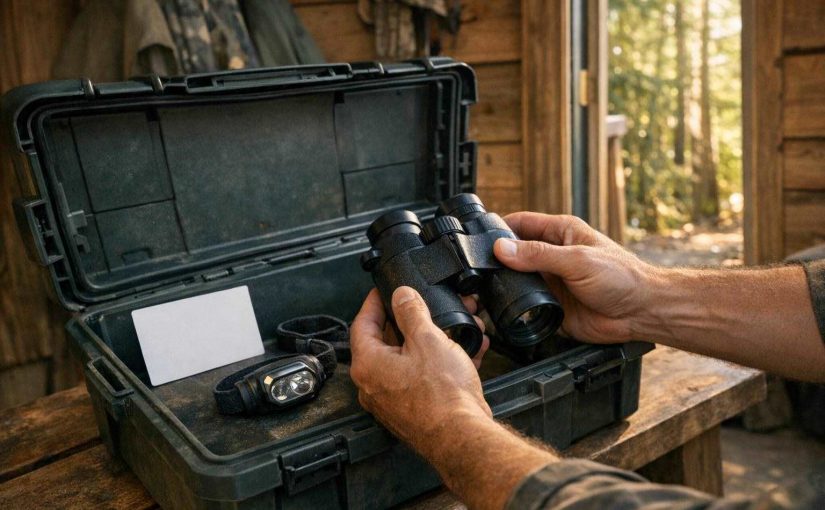
While lost hunting gear is not typically associated with the term "friendly" it is often an easily over looked item left behind at a busy hunting camp. Most often the item that is "left behind" is a headlamp left in a truck or a damp sleeping bag tossed into a camp storage bin and never seen again by the camp owner. In most cases lost gear could have been prevented had the person who last used the gear been made aware of its disappearance prior to their departure.
Start with a camp-wide gear inventory
First make a list of items that get passed from person to person, from vehicle to vehicle, from cabin to field location and back again. Don't feel like you need to list every single sock. Cooking gear, lanterns, tools, radios, etc. are all good candidates for a gear tracking system as well as game-care supplies, ground blinds and spare clothes.
For those items which have descriptions, make sure the description is sufficient to clearly and uniquely identify that item. A simple "green cooler" may not be sufficient if there are many coolers of similar color and type. Add a brand, model #, color, distinguishable marks, and storage location. Sometimes a photo of the item is helpful as well. However, the photo should not be added to the list as the list should remain simple.
Determine a simple status for each item: available, checked out, needs cleaning, needs repair, missing. Use this list when you are prepping for a hunt and all the gear is readily available. It helps to reveal problems with gear that have already been noted but not fixed yet.
Make every handoff visible
Simple is best. Borrowed gear tracking should be a process that is simply used. A notebook in a camp's main entrance area could work very well for a small outfit. Later, online lists can be set up for parties who arrive on different days. Regardless of format, tracking same information every time it is used is most important.
The borrower must give due care to the gear before he leaves camp for his hunt. Inspect for wear and complete all parts. Identify any problems that are already occurring with gear and notify the person who is responsible for the camp supplies.
Taking photos of a buckle that has broken, or of a case that has cracked, will enable you to easily show the extent of old damage, which could be mistaken for new damage. This helps to show the exact extent of old wear or damage.
Use a checkout routine that takes minutes
Establish a simple 'borrowing' procedure before you head out on your trip, e.g. take a few minutes to verify all parts for an item (accessories etc), inspect it for any 'wear' and note any damage. Store borrowed items in labeled bins etc in the same place as before.
For most camps, gear can be kept in shared locations like labeled bins or organized on shelves with items grouped by type (e.g. batteries together). Where possible, dirty clothing and damp gear (sleeping bags, jackets, gear used in muddy conditions) should be stored on ground or low on a hook so that they can dry out some before being put back into storage. Tools and gear for repair should be stored in an easy to find location so that repairs can be made without delay.
Follow a similar procedure for checking gear in. It should only take a few minutes. Verify that all parts were returned, that everything is in good working order, and that gear was put back in its proper storage location. Be sure to open up any clothing, sleeping bags, etc. that were used and check for moisture before storing them away in closed cases.
Treat symptoms as maintenance warnings
Missing parts are perhaps the greatest indicator of problems with a gear tracking system. However, other symptoms of problems with a gear tracking system could be recorded in a camp inventory. For example, flat batteries that are brought back to the camp again and again, gritty zipper parts, loose straps, bent metal parts, optically fogged lenses, mysterious stains, and so on. These items indicate that equipment are being returned without being checked for.
Problems such as these should not wait until the next trip. Note a cracked load-bearing part, frayed strap, damaged cable, leaky fuel container, poorly waterproofed item, non functioning communication or navigation item and put it in a place where repairs can be found. Eventually that item can be put into storage until proper repairs can be done.
Don't make up your own repairs to gear that has safety implications when you're not sure of the proper repair. If in doubt, check the manufacturer's current repair instructions, or have the item repaired by a qualified service provider. Requirements and recommendations for gear can change, as well as local regulations that apply to specific items and activities. Check current, official guidance for requirements and recommendations where safety and legal issues are concerned.
Set fair responsibility before the season
It is essential that a clear agreement of ownership is established before any damage is incurred. The person borrowing any item needs to be responsible for inspecting it for damage, returning all parts (of an item), and explaining any unusual wear when returning the item. In addition to the borrower being responsible for the gear, a person at the camp needs to be set up as the coordinator to manage the inventory throughout the season.
Similarly, consumables such as batteries, fuel, cleaning solution, etc. and items subject to normal wear (e.g. as opposed to damage) should likely be treated differently from items that are personal in nature and subject to chance damage (e.g. broken strap on litter cartridge case), or those of unusual value that are prone to loss (e.g. specialized tools).
When you return to camp at the end of a hunt take a few minutes to organize your gear for the trip out. Compare the list against what you have brought back and note any items that need repair. Update the storage of items to reflect where they have been moved to. The only question you need to ask of each item is would another person in the camp be able to figure out what condition this item was returned in without being told. If the answer is no then you need to add another line to the item's record.
Good equipment responsibility is mostly quiet work. Even the best of equipment checkslists, the most honest of condition notes, and the most deliberate of return methods will seem to fade into the background of your camp's functions. But in protecting the trust in shared equipment needed for good times afield, it is worth it.